Home
Filter By
Categories
Availability
Brand
Weight
Price
Selected products
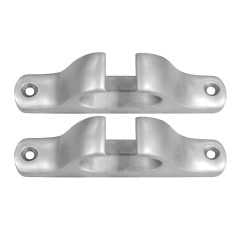
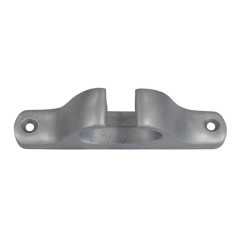
Set 2 pieces of Anodized light alloy symmetrical fairlead - 210x38mm N11102500249-2
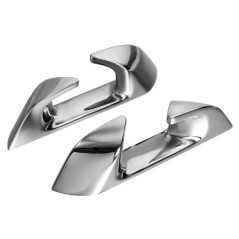
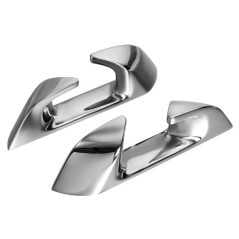
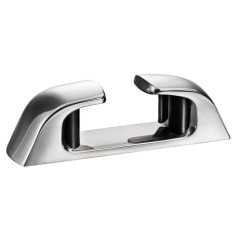
Stainless steel Capri Straight roller fairlead Bow Rope up to Ø 22mm OS4030500

Special Products
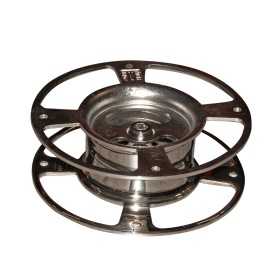
0-5 adjustable stainless steel base for Glomex Sat Antennas FNI5509500
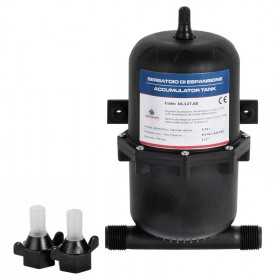
0,75l Accumulator tank Max pressure 8,6 bar N43838601058
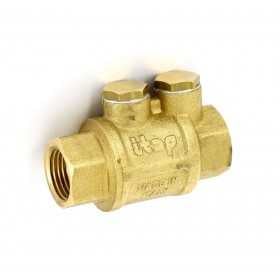
1/2 inch bronze non-return valve N43437601077
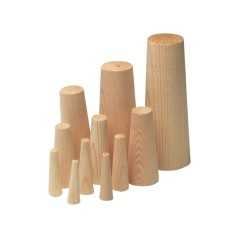
10 Emergency Wooden Leak Stop Cones 8-38mm for Leak Sealing N91556205700
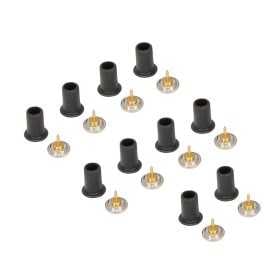
10 pins for Q-SNAP tool for correct positioning of fasteners OS1030016
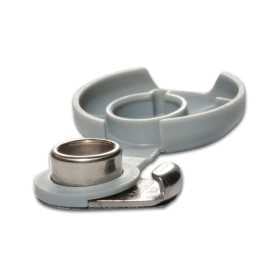
10 plastic caps for Q-SNAP snap fasteners OS1030017
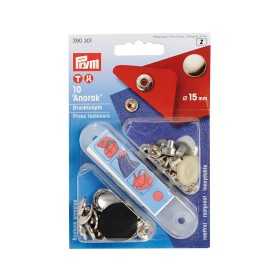
10 Prym press fasteners male + female for fabric OS1030102
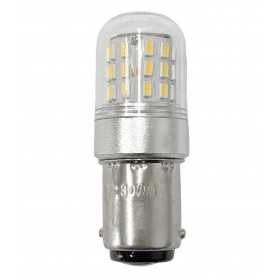
10-30V BA15D 3W LED Bulb Warm White 3000K N50227502218
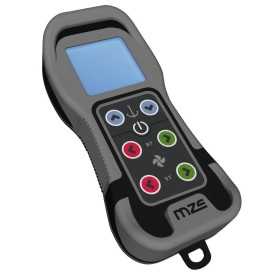
10-30VDC Universal chain counter radio control IP67 868MHz OS0236801




Solar and Wind Energy
Subcategories
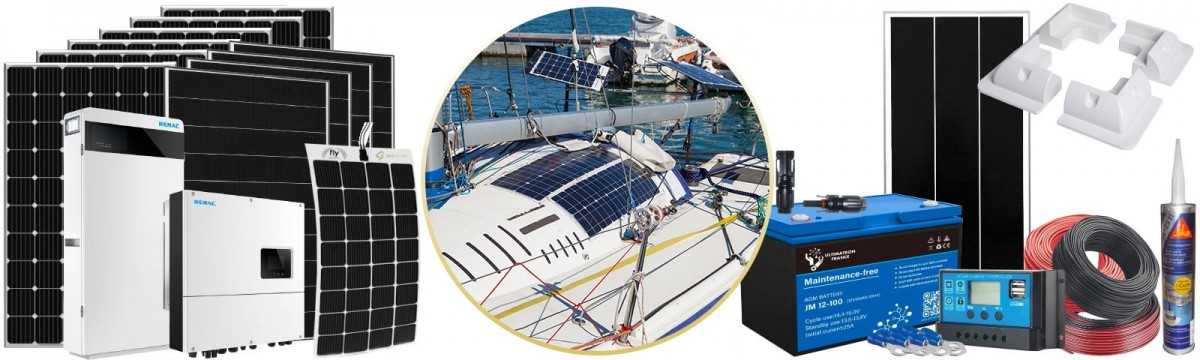
Photovoltaic Kits Boat Camper Van
Stand alone photovoltaic kits designed for small applications such as boats and campers.
The kits we offer are composed of several components in order to provide a complete and ready-to-use set.
In this category you will find photovoltaic kits without the battery ideal for those who already have a battery and do not intend to replace it.
The basic components of a photovoltaic kit are:
- photovoltaic panel
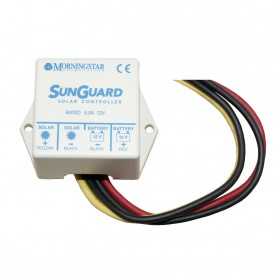
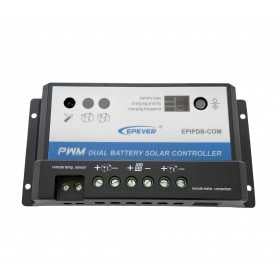
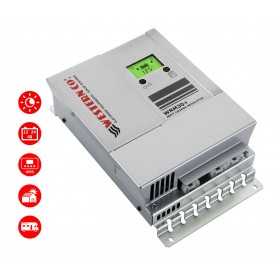
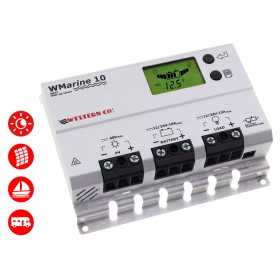
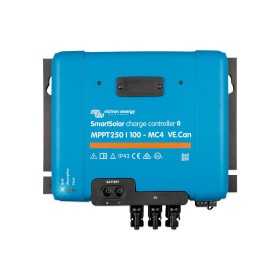
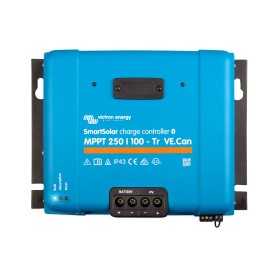
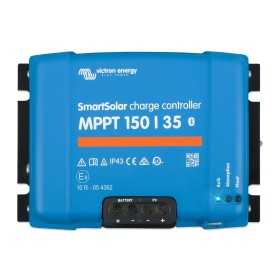
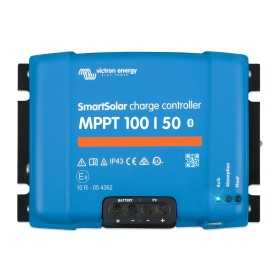
- charge controller
- battery
- connection accessories
- mounting accessories
DC-AC Inverter
The 100% OFF GRID inverters are used in all those renewable energy systems, generally at low voltage 12-24 or 48 volts and are indispensable for transforming the direct current from the accumulators into alternating current which is then necessary to operate the vast majority of commonly used devices.
An inverter (term of the English language that can be translated into Italian as inverter), in electronics, is an electronic input / output device capable of converting a direct current at the input into an alternating current at the output.
The applications are many:
- in UPS (uninterruptible power supplies) they convert the voltage supplied by the battery into alternating current
- in the transmission of electrical energy they convert the energy into direct current transferred in some power lines to be fed into the grid in alternating current
- in the use of photovoltaic panels, it allows to transform the direct voltage into alternating voltage that can be used in the home or placed on the distribution network (if the current is fed into the national grid, a Grid-tie inverter is used)
- To create a switching power supply, for transformation into direct current, with considerable advantages in terms of efficiency, dimensions and weight
- In the aerospace field they are used to supply the avionics equipment of aircraft with a highly stable alternating current even if supplied by batteries (in case of electrical failure)
- Speed variation in electric motors
- On cars, caravans and pick-ups: they convert the 12V direct current of the battery to 230V into alternating current to operate 230V devices.
The simplest type of inverter consists of an oscillator driving a transistor, which generates a square wave by opening and closing a circuit. The wave is then applied to a transformer which supplies the required voltage to the output by rounding the square wave to some extent. More efficient devices such as MOSFET, thyristor or IGBT are often used instead of the common transistor. The square waveform generated by these devices has the problem of being rich in higher harmonics, while the sine wave of the electrical network does not. This leads to lower efficiency of the powered equipment, greater noise and electrical noise, and serious problems of electromagnetic compatibility. More complex inverters use different approaches to output a waveform as sinusoidal as possible. An electronic circuit produces a stepped voltage by pulse width modulation (PAM) as close to a sinusoid as possible. The signal, called modified sinusoid, is smoothed by capacitors and inductors placed at the input and output of the transformer to suppress harmonics.
All in One Inverter
The All in One inverters allow you to create an OFF GRID photovoltaic system for charging the battery bank (12v 24v or 48 volts) and the use of 230V alternating current with additional 230V AC input for emergency generator or grid manager. The ALL in ONE inverter is the simplest system to create an off-grid system with automatic exchange with the grid (or emergency generator), all components that usually make up a classic stand alone photovoltaic system (charge controller, inverter, control unit exchange and battery charger).
With these inverters you can always use renewable sources, therefore solar energy, energy stored in the battery and only in the absence of the two renewables, the inverter automatically exchanges on the AC emergency input of the generator or grid operator; This system allows you to have the maximum economic savings on your bill or even to completely eliminate the connection with the network operator.
ALL in ONE inverters have been designed to remain switched on 24 hours a day since thanks to the standby consumption of only 2W they do not discharge the batteries even if they remain switched on without loads applied. It should be noted that they also have the Cold Start function which allows switching on even without AC current, therefore in 100% OFF GRID operation and also in AC mode in the event of a power failure, the inverter restarts automatically.
All in One inverter main features:
• Pure Sine Wave.
• Integrated MPPT Solar Controller.
• Charging current selectable according to the applications.
• Solar and AC priority configurable via the LCD display.
• Compatible with variable voltages or generators.
• Automatic switch-on in case of AC power failure.
• Cold Start function (Start also with DC voltage battery only).
• Intelligent battery charger to optimize battery performance.
DC-DC Converters
Voltage reducers are devices capable of reducing the input voltage by 24V continuous, in an output voltage of 12V continuous. Very useful to be able to power most of your electronic / electrical devices on your vehicle with a maximum current around 30A.
AC-DC Battery Chargers
To fully charge your battery you can choose one of our Victron, Quick or Eurteck chargers!
Various products available for occasional and professional use with integrated bluetooth. Our chargers can be used for your lab and automotive devices, such as (classic) cars, motorcycles, boats and RVs. The battery is intelligently charged to the perfect condition. The seven-step charging algorithm makes your battery perform at its best. The charger gives the battery the power it needs, preserves its health, ensures better performance and a longer life. The Some chargers also have the function "Recovery of dead batteries" ... after a deep discharge Unlike other brands, the Victron Blue Power battery charger will try to recharge the batteries after a deep discharge by forcibly supplying them with low current. Normal charging will then resume as soon as there is sufficient voltage across the battery terminals.
Photovoltaic boilers
With the 10 liter boiler onwards you can generate your hot water with sustainable and economical solar energy. The connection of the solar panels takes place in seconds with a few simple steps and provides a reliable supply of hot water. Once installed, the boiler produces free hot water for years. Ideal for holiday homes and retreats in the garden or in the mountains
Wind generators
The wind generator, in particular, is the heart of the plants that exploit the kinetic energy of the wind to produce electricity. In fact, when the wind speed exceeds 10 km/h, the wind turbines start moving, generating - in turn - a mechanical force which activates the wind generators, which transform this energy into electricity.
Lead Acid Batteries
The lead-acid battery (also known improperly as a lead-acid battery or lead-acid battery) was conceived in 1859 by the French physicist Gaston Planté and is the oldest type of rechargeable battery (or accumulator, by definition), widely used on cars, motorcycles and other motor vehicles mainly to allow the combustion engine to start and power all on-board electrical utilities. Battery manufacturers not only use lead for the plates but add other elements such as antimony and calcium, these elements serve to decrease the most common negative phenomena in batteries such as self-discharge, life in charge / discharge cycles or tendency to sulfation. Its ability to deliver instant high power on ignition makes it quite powerful. This feature, together with its low cost, makes it convenient for use in motor vehicles to power the starter for a few seconds. A cell is conventionally considered discharged when at its ends there is a voltage lower than 1.75 V / cell (10.50 V / batt., At 25 ° C and at least after about 10 min of rest) and fully charged when it is of 2.15 V / cell (12.90 V / batt., at 25 ° C and after 24 hours from the charge). This type of battery, if well treated and maintained, can have a very long life, conversely a lack of maintenance significantly reduces the life of the battery. The most common types of faults to which lead-acid batteries are subject, if they are not well maintained and used within the limits prescribed by the manufacturers, are: internal short circuits, the sulphation of the plates / cells and acid leaks, even if these he last type of damage is a particularly rare event, given the reliability of current plastic casings. The short circuit occurs when two plates of opposite polarity come into contact in an element due to the breakage of the separator by mechanical action (shocks, vibrations) or due to the accumulation of active matter on the bottom of the cell (typically PbO2 in the positive plates) escaped from the alveoli accidentally broken, also due to sulphation or prolonged corrosion of the acid in high concentration. Furthermore, excessive and prolonged charging currents can overheat the plates and even deform them due to thermal expansion in the most serious cases. The sulphation of the plates / cells, on the other hand, is a natural chemical process that occurs whenever a lead acid accumulator is discharged to supply electricity to an external user or is left inactive for a long time, in which case the self-discharge / internal dispersions (always present) reduce the available energy initially present in the accumulator.
DC-DC Battery Chargers
Professional three stage adaptive DC to DC charger with integrated Bluetooth. For use in dual battery systems in vehicles or boats where the alternator and starter battery are used to charge the service battery. The unit can be monitored and programmed via Bluetooth and can be controlled via remote on/off switch.
LiFePO4 Lithium Batteries for Storage Systems
Lithium iron phosphate batteries.
The lithium iron phosphate (LiFePO4) battery (also called "LFP" for short) is a type of rechargeable battery, specifically a lithium ion battery, which uses lithium iron phosphate as the cathode material.
LiFePO4 batteries are always batteries that use lithium chemistry, therefore they share the same advantages and disadvantages with it. The key advantages of LiFePO4 batteries, compared to LiCoO2, are greater thermal resistance, greater resistance to aging, higher peak current and the use of iron which, unlike cobalt, has a lower environmental impact.
The average life of the LFPs, if used at 90% of the nominal capacity, abundantly exceeds the 2,000-10,000 complete cycles of useful life, even subjected to large loads, giving excellent voltage stability. Compared to other lithium technologies, LFP batteries are subject to a relatively low aging effect even when kept at high temperatures.
The cells are commercially available in different formats which make them particularly suitable for making traction batteries in the most popular sizes of 100 / 200 / 300 / 400 / 500AH.
A photovoltaic accumulator must be reliable for many years, only in this way can it be economically sustainable. Again, battery technology is crucial. Our LiFePO4 batteries are designed for a duration of 2000-10000 cycles depending on the model and use. (Max 80% discharge is recommended). They have no memory effect.
Lead AGM batteries
Lead-acid batteries are the oldest and today the most widespread technology used for energy storage. Used for starting the engines of cars, motorcycles, boats, etc. but also for millions and millions of off-grid and on-grid photovoltaic systems. This type of battery has the enormous advantage of being extremely reliable. AGM technology Inside the AGM batteries there is a valve that automatically renews the energy production without having to fill the battery with the addition of acid.If the abbreviation AGM (Absorbed Glass Mat) is shown on the battery it means that inside there are fiberglass plates that absorb and retain acid. In normal state, lead AGM batteries are equipped with a gas recombination system inside. The valves therefore have the task of releasing gas in the event of an overload. The AGM plates therefore make it possible to reduce the production of gas by transforming it into water and redistributing it in the internal circuit so that it produces current. AGM technology therefore allows to have a hermetic battery without any possible leakage. Should the battery fall, the acid will not leak. AGM batteries also do not require any type of maintenance: unlike lead-acid batteries, they do not require regular additions of electrolyte.
Lead GEL batteries
A modern GEL battery (also known as a "gel cell") is a VRLA battery with gelled electrolyte and AGM (Absorbed Glass Mat) batteries are lead-acid accumulators in which the electrolyte is absorbed in separators consisting of a spongy mass in fiberglass, precisely for this reason the AGM and GEL batteries also have a sealed container and the recombination of gases have the following advantages:
- really maintenance free;
- they are compact and very resistant to mechanical stress (so resistant to be used for military purposes);
- they can be mounted in any position;
- they can be used at high altitudes and at sea;
- they withstand high temperatures better (ideal for uninterruptible power supplies);
- thanks to the division of the glass fiber plates, there is no danger of short circuit between cell and cell;
- they are suitable for starting motors thanks to their high starting currents;
- they have a low non-discharge and a high aperometric yield during charging;
- charging times shorter than lead acid batteries;
- immune from the risk of accidental spillage of liquid acid;
- suitable for installations near people and electronic devices.
What are the differences between GEL batteries and AGM batteries? And for which uses should you choose a GEL or AGM battery? The quality of both is very high: AGM technology is much less delicate and supports a greater number of deep discharge cycles, as AGM technology allows the electrolyte to evaporate during the charging and discharging phase (i.e. when the internal temperature increases), at the end the GAS recombines with the acid keeping the battery efficient. GEL accumulators have a completely gelatinized acid and are less durable over time due to the difference in temperature that is created in the charge / discharge cycles that cause the gel to sulfate, for this reason they are considered more suitable for a buffer use. (e.g. in UPSs), they guarantee a very high life expectancy. In the case of heavy cyclic use (industrial cleaning machines, golf cars and electric vehicles, etc.) it is advisable to turn to cyclic type GEL batteries that allow deeper discharges and a greater number of charge / discharge cycles typical of the intense use.
AGM batteries are suitable for both uses in cyclical use (they support many charge / discharge cycles) and as a buffer use (long-term energy reserve) therefore particularly suitable for:
- pleasure and professional boating
- electric vehicles and machinery
- industrial uses
- UPS and emergency in general
- Solar
Photovoltaic modules
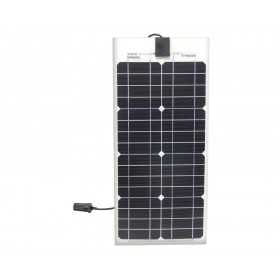
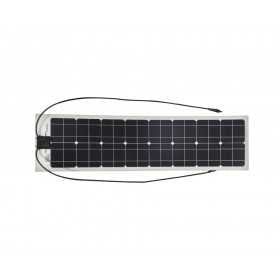
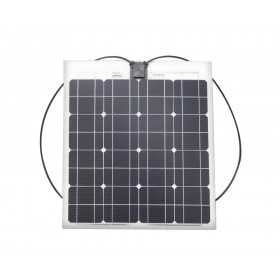
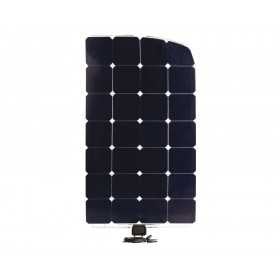
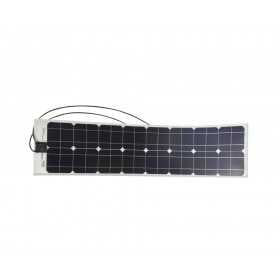
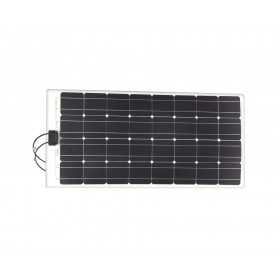
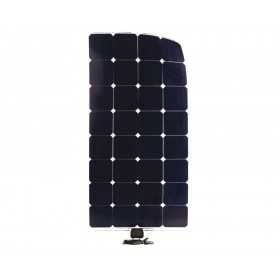
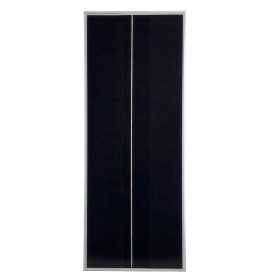
The wide range of high efficiency mono Full Black photovoltaic modules with multi-busbar technologies and half-cut cells, glass-glass photovoltaic panels, bifacial photovoltaic panels, semi-flexible panels, etc. Most of the panels are directly available from stock.
The latest generation high efficiency photovoltaic solar panels exploit SHINGLED technology.
Shingled technology uses a system of cells that are cut along the main grid into 5 or 6 pieces by laser tracing. The cells are connected together using ECA electroconductive adhesives (as opposed to using solder tape) to form a string of cells. The shingle interconnection offers very high efficiency with better low irradiation performance. Compared to standard panels.
• In the morning and in the evening, photovoltaic panels with Shingled technology still guarantee 87% of energy production, unlike standard modules, where the diodes stop working by deactivating the circuit.
• Shinlged technology allows you to insert a greater number of cells on the photovoltaic module, and consequently almost 100% of the panel surface is covered by solar cells, ensuring greater energy performance and high efficiency.
• Both LID (Light Induced Degradation) and PID (Potential Induced Degradation) are rigorously eliminated to ensure higher effective yield over life.
Installation Accessories
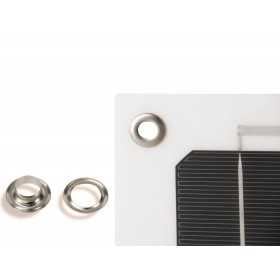
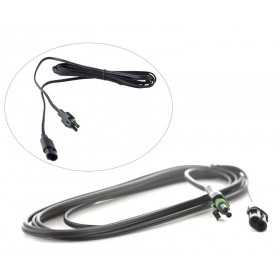
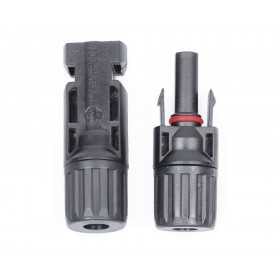
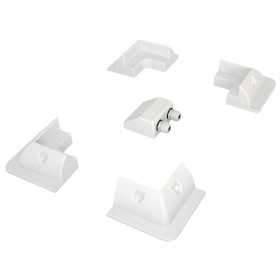
Wide range of accessories for installing photovoltaic panels such as components for fixing systems, photovoltaic cables and connectors, DC/AC panels, stainless steel hardware, battery switches, fuses and fuse holders.
Power Generators & Portable Generator Sets
Discover our selection of power generators and portable generator sets, designed to provide a reliable and continuous source of electricity on boats, motorhomes, caravans, campsites, and anywhere access to the mains power supply is limited or unavailable.
Our range includes portable generators, generator sets, and advanced inverter generators, available in different power outputs to meet a wide variety of requirements, from powering onboard equipment and lighting to charging batteries and operating electrical and electronic devices.
Inverter generators are particularly suitable for sensitive electronic equipment, as they provide stable, high-quality power. They are an excellent choice for powering laptops, smartphones, tablets, TVs, battery chargers, navigation equipment, and other electronic devices.
Portable models combine compact dimensions, low weight, and easy transportation, making them ideal for marine applications, motorhomes, camping, and outdoor activities. Selected models also feature an ECO mode, which automatically optimizes engine operation according to the required load, helping to reduce fuel consumption and operating noise.
Products in this Category
- Portable power generators
- Generator sets
- Pure sine wave inverter generators
- Compact generators for boats and motorhomes
- Generators for camping and outdoor activities
- Emergency backup power generators
- Low-consumption generators with ECO mode
- Generators with parallel operation capability
- Generator accessories and components
Ideal for boats, yachts, motorhomes, caravans, camping, outdoor activities, and emergency backup power, our generators provide a practical and dependable solution for having electricity available whenever and wherever you need it.
There are 313 products.